Wednesday, August 9, 2017

Alysha Shugart - Science Operations Specialist at Gemini South Observatory

1- Present yourself : who you are + describe your job

My name is Alysha, and I am a science operations specialist for Gemini South Observatory. I am responsible for observing queue programs at night, operating the telescope, and improving the infrastructure during the day time, such as reduction scripts and instrument checks.


2- Can you explain your study + professional paths?

I was an undergrad for a long time because I could not decide what I liked more - I ended up taking three degrees. I had a job during my entire undergraduate career. I either worked part time in the wind tunnel labs, a science radio station, a radar lab that ran experiments at the local lake, or doing projects all over the astronomy department, to name a few. I volunteered around the department, taking large scripting projects and data reduction tasks that were daunting but needed to be done. I learned all of my skills with ds9, IDL, IRAF, and python this way. I got a reputation in the department for this, so I ended up creating a job for myself that I called "slack-puller." The incredibly busy faculty and grad students could ask me to help write reduction codes for any of their sciences, or create websites to present findings. Most importantly, I became the resident observer. My undergrad school has a large facility-class observatory, and one of the faculty I worked with asked if I would like to be trained to observe his data for him to commission a new instrument I was helping to test. After this first time, I advertised my enthusiasm for observing, so I readily volunteered for any data runs that faculty or students needed done. During this time, I realized that graduate school was not for me. I noticed how busy and stressful that life seemed, and more and more, I noticed cut-throat politics, and high competition, that I thought would wear me down. I loved this life too much to succumb to the tedium of graduate school. As I was edging more and more away from this path, I found resources to search for observer jobs that could satiate my love for the night runs. I managed to find a few REU programs that were at observatories, and during the summers, I was learning the trade at new stations all over the country. I graduated, and after working in a wafer lab for 6 months, I found a full-time job at a smaller observatory in New Mexico, where I was responsible for the entire operation of the telescope and all 8 instruments during the night. With a free tuition program, I enrolled in the graduate school for astronomy with the parent school, and will soon complete my Master's degree. I continued to monitor these jobs as they came up, and continued applying for anything I found interesting, until I accepted the position I have now at Gemini South.

3- How long have you been working in an observatory?

I first trained on a professional telescope when I was 19 years old, so 10 years.

4- Pros and Cons (Likes/Dislikes) of your life in an observatory?

I love that the job feels like "jack of all trades, master of none." I get to experience all different kinds of science, and I involve myself in engineering tasks, and telescope shutdowns. It's sort of like going behind the scenes, and I have always been fascinated with hands-on mechanics. I have plenty of opportunities to learn new coding skills, and I still like to volunteer around the office to help out scientists with data reductions. I have more free time to enjoy a lot of hobbies outside of work, such as surfing and traveling. Some of the dislikes are that it can get lonely on the summit, and it is really hard to stay awake on the 5th night of a run in the middle of winter where the nights are 16 hours long. Switching back and forth from a day schedule is physically painful, sometimes. But these are minimal compared to the benefits.

5- What is the funniest thing that has happened to you at the observatory?

I remember when I was giving a new group of graduate students from the parent school a tour of the telescopes at my observatory in New Mexico. A member of the faculty was there, giving them information about the telescope. I was in the back, goofing around with some friends I knew from school. The telescope was parked, of course, but as a joke, one of the operators had put a sign near one of the big, red brake buttons that said "Danger: Do Not Push! Emergency Brake Only! Telescope will be damaged if Pressed" or something to that nature. This was a redundant brake system, so there were similar red buttons all over the telescope levels, but only this one had been marked. Also, more brakes were engaged, but only one needed to be pressed to deactivate the az/alt motors. The professor noted it, and re-emphasized to his students to use caution and not touch anything. Without missing a beat, my friend said "Oh wait, you don't want us to touch this?" and smacked the big red button. The professor yelled and *squeaked* in surprise, which turned into a explicit exclamation. He was visibly angry. HIs students and I were trying not to laugh, but I explained that there was no harm done, and the student had known this before pressing the button. I had already told him about the redundant brake system and the joke sign. Bonus: The professor's exclamation was inadvertently recorded by another student who was filming the telescope. The soundbyte was turned into a ringtone that the student used for months.

6- What is the scariest thing that has happened to you at the observatory?

When I was working at McDonald Observatory, which is near the Chihuahua desert in west Texas, I had some scares with the local wildlife. There were rattlesnakes, copperheads, mountain lions, and wild boars (Javelinas) that could grow to the sizes of a small black bear, and were just as dangerous. The telescopes were separated by some steep paved hills from the astronomer's lodge. I was observing with another graduate student, and I decided to make the 10 minute walk back to the lodge and get some snacks for us, and stretch my legs. Flashlights were provided all over the site, and naturally I had one with me. However, when I walked outside, I left it off, deciding to enjoy the night sky in Texas, which is really quite incredible. It's one of the darkest sites in the lower 48. 20 miles and several mountains separate us from the nearest man-made light source, so it is truly an inky black at night. I am walking to the second set of iron-grated stairs, which serve as a shortcut between the telescope and the lodge, looking up and day dreaming. Before I reach the landing, I feel something breathing, and then snuffing on my leg. I scream in fright, and the suckling (baby Javelina) squeals in surprise. I flick on my flashlight and sprint toward the stairs. I hear grunting and snuffing behind me, but I don't turn around. I can hear something big following me, but I just keep running towards the stairs. I reach them, and descend 5 or 6 steps down until I grab the rail and look back. I see mama looking at me from the landing, snorting and grunting. Her tusks were short, wide, and blunt, but her statue was enormous. She came up to my waist at least, and outweighed me almost by triple, I would say. And she was not happy that I scared her baby. She continued to snort and brace at me. I went down the stairs, and ran into the building. I was able to find someone to walk back with me. Staying awake that night was pretty easy after that.

7- When was a time that you weren't sure if you could do something, but you did it?

Since I was alone every night in New Mexico, any technical/mechanical problem that came up during the night was my responsibility. Through experience, I learned how to fix these myself, and there were instructions online for some cases. But, there's a first time for everything, and sometimes these problems were ones I had never seen before. The operators were expected to fix things as long as we were confident we could, and we were inherently trusted to know our limits and call one of the engineers during the night if there was something we could simply not fix. In no way were we to endanger the telescope or equipment further attempting something we did not know how to deal with. I spent a lot of day time with the telescope, working with engineers so I could deal with these problems better at night. It wasn't always enough though. There were several times during the night, well in the wee hours of the morning, where I trusted my knowledge of the telescope and attempted something new to fix a problem and get back on sky. At these points in time, I should have called the engineers, but I trusted my skills and managed to limit sky time loss when I was able to deal with these faults myself. I learned very well how to take calculated risks.

8- What advice would you give to someone interested in working at an observatory? Anything specifically if they are a woman?

Experience is more important than anything. Grades and papers do not matter as much for this work, so concentrate on getting practical experience if you can. Instrumentation is a great place to start, and hands-on experience will go a long way. I never got too focused on one project, because I thought it would limit my skill set. I took a lot of tasks that no one wanted to do because there was little short-term reward. But I learned a lot about data reductions and scripting this way, and my discipline was not limited to one type of science. Be sure to advertise what you are interested in as well, because people will remember these things if you are vocal enough.

I have not encountered any problems because of my sex in my work. I am not consciously aware of any benefit or disadvantage it has dealt me, and I have not experienced problems with any coworkers related to anything personal about me. I attribute my experience and career more to my personality - I am extroverted, and I am happy to talk to people about what interests me. I am vocal about interest in projects, and I am happy to remind people that I am available to help. I spent more of my free time working during the days with the engineering staff, and I volunteered during my free time to help with projects that interested me, such as an in-house instrument commission, and telescope shutdown and mirror recoating. I am aware that other women have had problems in this field because of their sex, and that we are underrepresented in this field. For this, find your allies. They will be there, and will help you create change. It's not always up to someone else.

9- What do you do for fun at the observatory?

During the nights, I will talk with my coworkers, and we will often take turns playing music and sharing new things with each other. I will often take up drawing during a long exposure. During bad weather nights, I read or play board games with coworkers. When I wake up, I like to exercise before beginning my night shift, and I will cook meals to share with my observing buddy before we have to go in to work.

10- What do you do for fun when you're *not* at the observatory?

This job is great because I am able to leave my work mostly at work. I have time for all of my non-science related hobbies. I use my free time after a night shift to travel, sometimes on a camping trip, and sometimes to other countries. I garden and go to the beach and surf or swim during the days. I can read and draw in my free time, and during football season, I never miss a game.

Friday, July 7, 2017

Yara Jaffé - Fellow at ESO/VLT

1- Present yourself : who you are + describe your job

Hi, I'm Yara Jaffé. I am a Venezuelan astronomer currently based in Chile.


I work at the European Southern Observatory (ESO), where my time is split in half between pure research, and duties as support astronomer at the Very Large Telescope (VLT) in Paranal Observatory. In Paranal I operate the cool telescope with the lasers (Yepun) that also hosts the latest-generation wide-field integral field spectrograph MUSE.


Research-wise, I am mostly interested in understanding the formation and evolution of galaxies as a function of cosmic time and environment. In particular, recently I've been mostly studying the so-called "jellyfish" galaxies, whose beautiful tentacles of stripped material tell us a story of cosmic migration. Basically what happens is that, due to gravitational attraction, galaxies migrate from empty regions of the Universe towards massive galaxy clusters. Recent observations and simulations seem to indicate that when a normal spiral galaxy enters a cluster, it encounters the hot and aggressive intra-cluster medium, which is able to strip away the galaxy's fuel for star formation (cold gas) via pressure. The result is a deformed spiral galaxy with long tails of stripped gas and newly formed stars that resembles a sea jellyfish.


2- Can you explain your study + professional paths?


When I was in high/school I was not sure what to study. Many things interested me. I was between maths, physics, philosophy, arts, and international studies. I ended up studying physics at Universidad Simón Bolívar (Caracas), as that could then allow me to study the entire Universe. After 4 years of courses, I moved to Mérida in the Venezuelan Andes to do a thesis in astronomy. For my thesis I used observations of RR Lyrae stars to look for galaxies cannibalized by the Milky Way (Galactic archaeology), and constrain the shape of the Galaxy's dark matter halo. During that time I also worked as a support astronomer at the small national observatory run by Centro de Investigaciones de Astronomia (CIDA).  


Although I loved studying our own galaxy, I wanted to move on to study the vast zoo of galaxies in the distant Universe.
After defending my undergraduate thesis I was advised to do an internship at Goddard Space Flight Centre (NASA), where I worked on mass outflows and fueling flows of Seyfert galaxies. After that, I moved to England to start a PhD on  "the formation and evolution of galaxies as a function of environment" at the University of Nottingham. I got to work with data of hundreds of distant galaxies in clusters, trying to understand their evolutionary paths using statistics. It was a different approach to my previous research: less detail but bigger numbers. For my second year I went to the ESO headquarters in Germany to collaborate with researchers there. Then I went back to Nottingham to finish up the papers I had been working on and write my thesis. At the time, my (now) husband had taken up a job in Exeter (south England), so I moved there to finish writing the book. The astronomy department there kindly hosted me.


Before defending my PhD I got an offer to work as a postdoc in Padova (Italy). I spent there a year, learning about the gas content of galaxies, Italian, and the food culture. My main scientific output were a series of papers revealing the correlation between gas deficiency and galaxy environment.


Overall, I enjoyed my time in Europe greatly, but I felt it was time to go back to Latin America. I could not go back to Venezuela due to political reasons (I did try), so me and my husband tried our luck in Chile, where we still are. I first got a Fellowship to do independent research in Concepcion, and now I'm in Santiago working at ESO as a Fellow. In Concepcion I became an independent research, and I lead several studies that used new approaches to study gas stripping processes in galaxy clusters.


Now, at ESO, I've taken it a step further. I am now part of a large program that is obtaining exquisite data with MUSE of hundreds of stripped (jellyfish) galaxies in the nearby Universe.


Although I like the observatory work, I hope my next step will be towards a permanent position in a University here in Chile.


3- How long have you been working in an observatory?

A year and a half.


4- Pros and Cons (Likes/Dislikes) of your life in an observatory?


I like being in the desert, its very peaceful up there. Sometimes you feel on top of the world. Professionally, since I started working at ESO I've learned A LOT about science, instruments, and people. In particular I feel that the exposure to different instruments, observing modes, and science visitors from all over the world have helped me become a more well-rounded astronomer.


I've to confess however that, at the beginning, working at the observatory was hard for me. I came from a very different background so I had to learn many new things. At the same time, I felt completely overwhelmed by the observatory life and the nightly routines. And last but not least, I was not used to working among so many men in such a different and isolated environment. So far my career had been in Universities, where, although women are underrepresented, I never felt dramatically different. But after a year and a half working at the observatory I can say I that I feel at ease with my duties, and I got used to the routine and the sometimes unwanted attention. I guess I'm an adaptable creature.


5- What is the funniest thing that has happened to you at the observatory?
6- What is the scariest thing that has happened to you at the observatory?

Here are 2 stories. I think they are both somewhere in between scary and funny.


The first time I went to Paranal as a visiting astronomer I was overwhelmed by the power of dryness. I was sleeping with a fleece on at night with all the curtains in place in complete darkness. Suddenly I got woken up by a sound. It was the sound of electricity: tak tak.
I opened my eyes and I could see a sort of illuminated aurora covering my bed. I freaked out not knowing what it was. After about 5 minutes (that felt like 30) I realized that what I was hearing and seeing was a result of the static caused by the extreme dryness.


More recently, during my last shift at the observatory, a spider fell on my head and I thought it was a scorpion --I've an irrational fear of scorpions since my brother used to grow them at home when we were little. I've been stung by them on 2 occasions!. This one however ended up being a harmless but freaky-looking spider.


7- When was a time that you weren't sure if you could do something, but you did it?


For the first 6 months at the observatory I felt I lacked the knowledge and skills to smoothly run scientific operations at the VLT, but I had to and I did.


8- What advice would you give to someone interested in working at an observatory? 

Anything specifically if they are a woman?


Try to be yourself as much as possible.
Do not try to be more like a man to be respected.
Do not lose your humanity.


9- What do you do for fun at the observatory?

Have night swims, walk in the desert in random directions, paint, knit, do yoga, watch movies, read books, and hang out with friends.


10- What do you do for fun when you're *not* at the observatory?


Mostly exploring Chile, I really like the mountains and all the mountain things you can do here (especially in the south). I also have a lot of family and friends in Chile so we gather a lot to eat, drink and be loud. My husband works in Valparaiso so I spend a lot of time there. I love the sea.

Tuesday, June 27, 2017

The ESO Very Large Telescope : Paranal Observatory

The ESO/VLT, aka Paranal, is located in the North of Chile, close to Antofagasta.
The ESO astronomers travel from Santiago to Antofagasta in an early flight and then take a bus for the ESO personnel from Antofagasta to the observatory. The trip takes 5.5 hrs on average.


Once arriving at Paranal, the ESO staff can pick up the keys of their room. The room was assigned at the start of the contract and has a closet, which can be locked with a key, where you can store clothes and necessities. This allows you to not travel every time with a checked luggage or more than your everyday pack.


In the everyday life of Paranal, there are many women working at the observatory: beyond the technical staff, from the reception, to the logistics, cafeteria, cleaning, etc..
However, the engineer groups are largely dominated by men, Chilean & European, meaning that during daytime engineering work, there are substantially fewer women around.


At night, the TIO (Telescope Instrument Operator) group has 99% of the time two women, in each turno. Turno is the Chilean word commonly used, even when speaking another language, and can be defined in english as a shift. They work on a 8/6 rhythm so it’s called the turno and contra-turno. Both TIO turnos have 2 women assigned at night.
On the astronomer side, the number of women can largely vary at night, as it depends on individual schedules and constraints. So sometimes, most of the UTs (Unit Telescope, ie 8m telescope) are run by a female astronomer, but at other times, only one of the UTs is run by a woman.
Between ESO Science Operation staff (TIOs + astronomers), it is important to remark that there is usually no feeling of minority or uncomfort although it is very common to be “mansplained”. But this is probably true in any domain, across various astronomical careers and institutes.


There is no shop, no supplies available at Paranal. They only provide some body lotion during your first visit like a little welcoming present that comes with all the safety gear they provide. The employee can ask for more lotion once their initial supply is finished, but provisions are limited and not everything is always available.  It is therefore important to bring all possible items a woman could need.
Although, at Paranal, a strong solidarity is naturally set between women, depending on your cultural background, it could be a little embarrassing to ask your colleagues for some protection supplies if yours run out or you simply forgot to bring some.


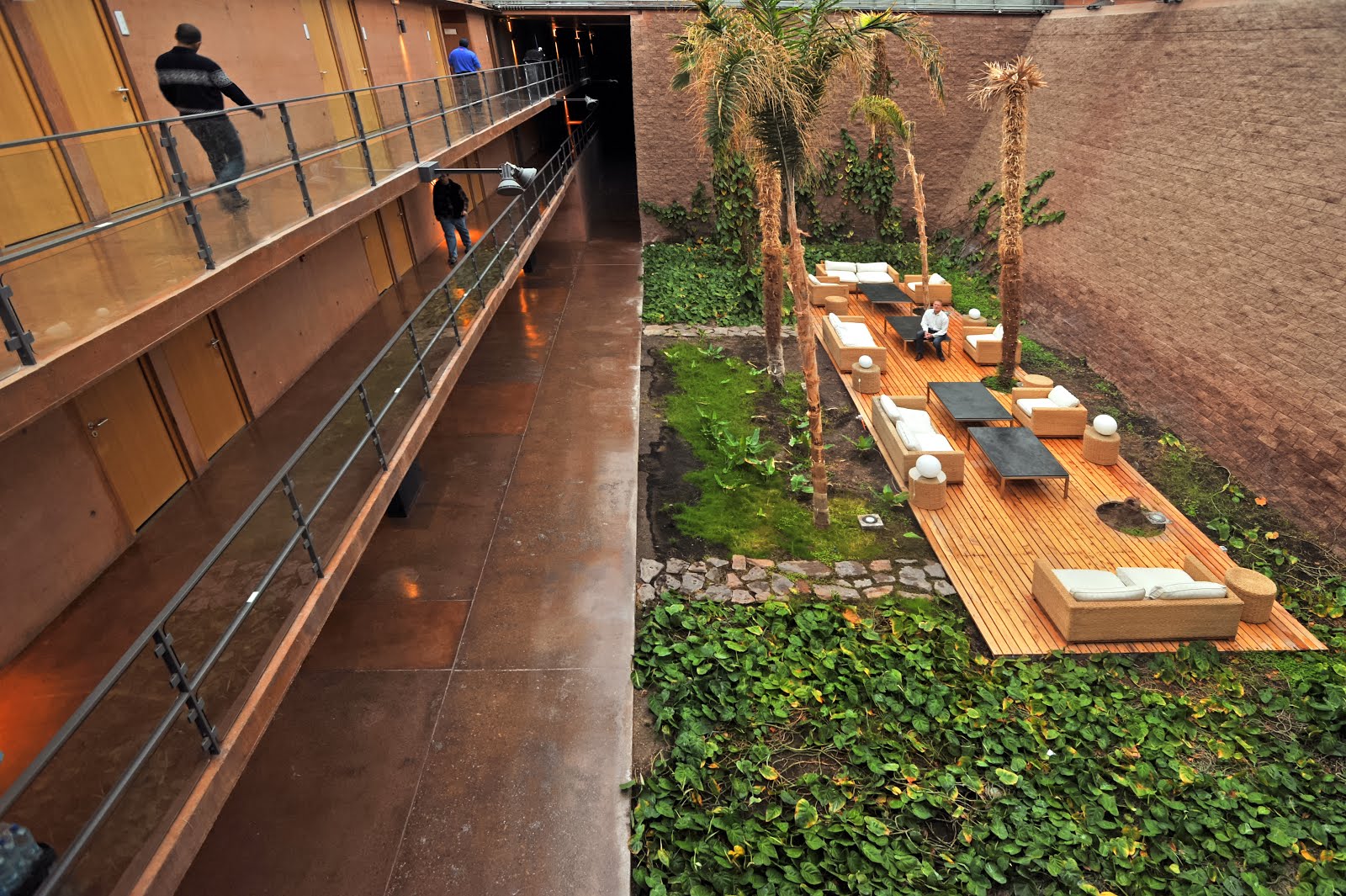
Paranal is very famous for its facilities -- interior tropical garden, swimming pool, gym, et..
However, the swimming pool, as much as everyone would like to use it, can be seen as a stage, as there is the reception + cafeteria + balcony just above it. It is not very frequent to see more than one person enjoying the pool. So it is a real show for most of the contractors and ESO employees when someone, and especially a woman, is swimming. So this is why often women prefer to avoid the swimming pool or try to find a time when the surroundings are almost free (e.g. after lunch when everyone is working or at the end of the night shift).


Most of us will therefore opt for going to the gym, which is located in another building and, depending on your schedule (day or night), it is usually quiet. It is rare to come across more than five people working out at the same time. And there is enough room for each of us having some privacy.


Life at Paranal, for a woman astronomer, is overall  very enjoyable and does not present any additional challenges specific to the place itself.